


The Truth Brings a Mid-Sized Music Venue to Nashville
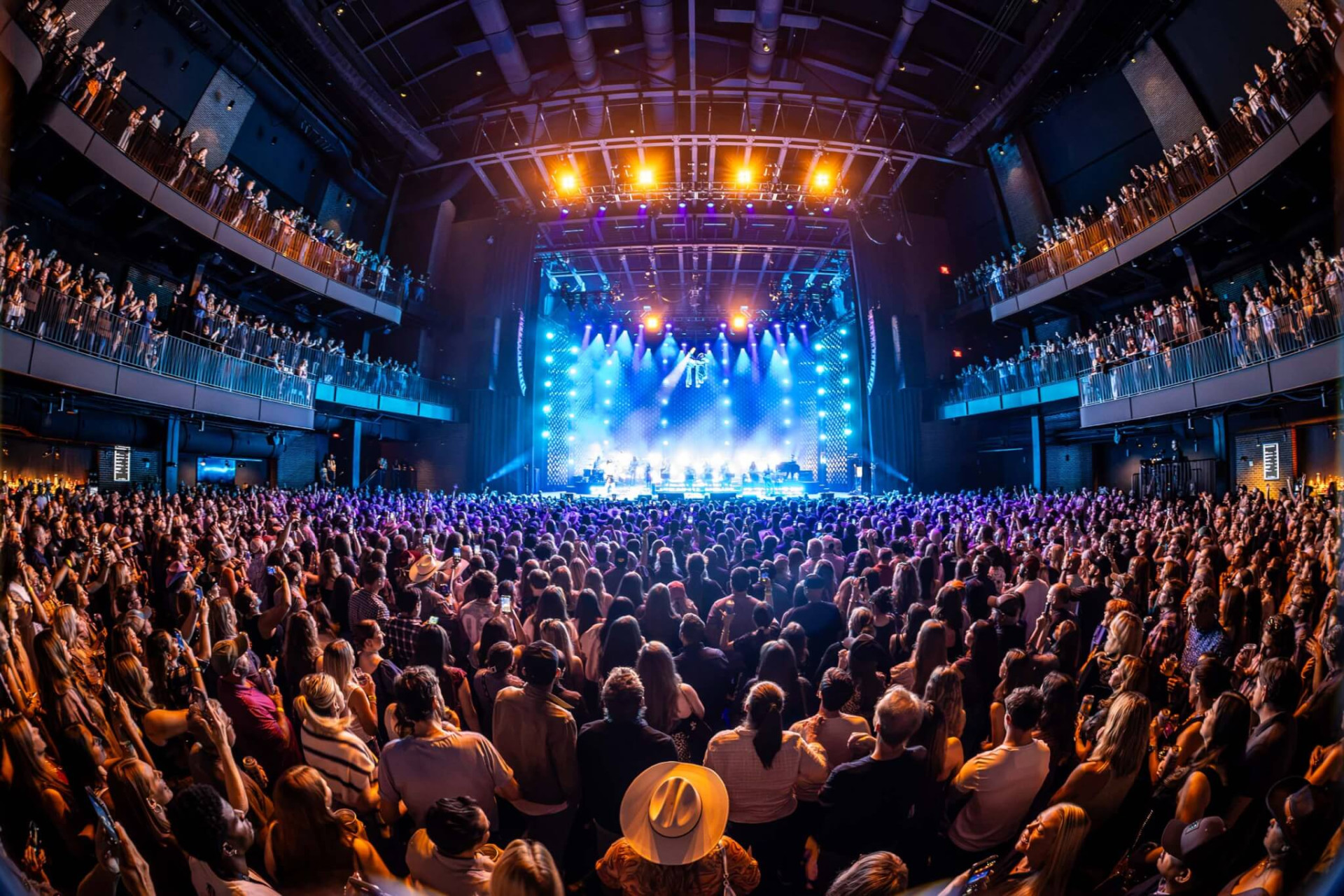
Music City, USA, has made space for a few more tunes, in the form of The Truth, a 4,400-person venue opened in October. A curious feature of numerous U.S. markets are gaps in the mid-range for concert venues—even in Nashville, the city where you can’t seem to drop a pick without hitting a guitarist. The town blissfully has no shortage of honky tonks, but for a crowd larger than Robert’s Western World—but short of arena-scale—options were a bit thin. George Jones said of Nashville, “You’ll be walking ’round in circles lookin’ for that country rhyme,” but your walk has become just a little shorter.
Mietra Beyer, head of Brand and Experience for Blueprint Studio, Live Nation’s in-house venue design team, told AN, “We’re actually seeing an enormous opportunity across the country at the sort of 4,000 to 5,000 capacity venue.” The concert behemoth opened 12 venues across the country in the last two years, including two in the past month alone: Citizens Live at the Wylie in Pittsburgh’s Lower Hill District and Satellite Music Hall in Memphis’s Crosstown neighborhood.
The Truth is located in Nashville’s Wedgewood-Houston neighborhood just south of downtown. Nashville has shown a verve for building lively neighborhoods out of thin air in recent decades: Wedgewood-Houston follows in the footsteps of the Gulch and Germantown. Historically an industrial neighborhood, it’s been transformed into a variety of uses in the last decades. The May Hosiery Mill two blocks from the Truth wove the socks that Neil Armstrong wore to the moon; now it’s home to Soho House and Pastis. United Record Pressing, the largest vinyl pressing company in the country, was located across the street until 2017; its former building still stands, along with murals of Charley Pride and John Prine.
AJ Capital Partners, which developed May Hosiery, has developed a number of projects in the neighborhood. They wanted a concert venue and Live Nation was happy to oblige. The imperative for Blueprint, Beyer stressed, was to avoid pressing out venues from the same mold. In other words, “How do you build things that don’t feel like they can belong anywhere else?” Beyer said.
Read the full story here
